5 November 2026 · 2 min read
How Framia's Node-Based Canvas Simplifies AI Video Creation
In this walkthrough, I build a sports drink commercial using Framia’s node canvas and AI agents, showing how you can create consistent, cinematic videos without switching between tools.
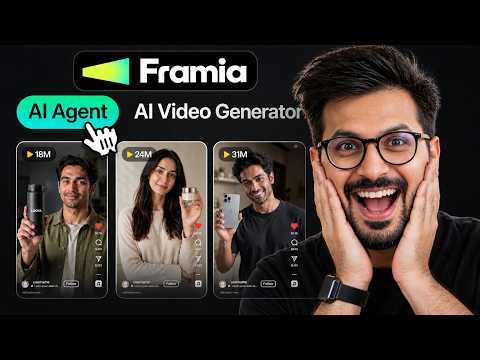
Creating AI-generated video often means jumping between different tools for generation, editing, and refinement. That constant context-switching breaks the creative flow and eats up time.
In my latest video, I explore Framia by Converge AI, a workspace built to solve that problem with a node-based canvas. Instead of juggling separate apps, you arrange your entire video workflow on one infinite canvas, and AI agents handle the technical execution.
What Framia offers developers and creators
The workspace is structured around Magic Nodes and Node Agents. Each node represents a task or a step in your production pipeline. Agents attached to nodes carry out instructions, from generating video clips to refining lighting or style, directly from text prompts.
This isn't a simplified template tool with limited options. The canvas is effectively limitless: you can chain together as many nodes as you need, experiment with different branches, and iterate without ever leaving the workspace. For anyone who builds automations or pipelines, the parallels to tools like ComfyUI will be immediately familiar.
Building a sports drink commercial from scratch
To show how Framia works in practice, I put together a gritty sports drink ad. I started with a basic brief and let an agent generate a first cut. From there, the real value of the canvas became clear.
Consistent characters with reference images
One of the biggest challenges in AI video is keeping characters or products consistent across shots. I uploaded reference images directly into the node system, and the agents used them as anchors for every generation that followed. This meant the athlete and the product looked like they belonged in the same campaign, even across different scenes.
Real-time editing with chat
Fine-tuning usually means re-generating or starting over. Framia has a "chat-to-edit" feature that lets you talk to your project. For example, I adjusted lighting and visual style by typing a natural language instruction, and the relevant nodes updated immediately. No re-prompts, no exporting to another tool. The project evolves as you give feedback in plain English.
Who this workflow is for
If you produce short-form ads, social content, or concept videos, the node-based canvas cuts out the friction of tool switching. Built-in templates also give you a quick starting point for styles like TikTok trends, so you can skip the initial setup and focus on customisation.
The combination of agent-driven generation and real-time natural language editing makes the process feel more like directing than operating software. It lowers the barrier for non-technical creators while still offering the flexibility developers want.
Watch the full video above to see the commercial come together step by step and to get a hands-on look at the canvas and agents in action.
Sources
- framia
- converge ai
- ai video
- node-based workflow
- video editing
- ai agents
Watch the full video on YouTube
Written with AI from the video above.
Learn to build with AI
Hands-on tutorials on Cursor, Claude Code, AI agents and more.
