Video tutorial · The Metaverse Guy
Testing Google's Gemini 4 Argon on Real Coding Tasks: Full Analysis
I put Gemini 4 Argon through five coding demos in Kilo Code—here's how it handled 3D simulations, game logic, and a landing page, plus what the high reasoning setting changed.
This video was made in partnership with Dokkio. It carries YouTube's paid-promotion label.
- Published
- 15 October 2026
- Length
- 9 min
- Views
- 100,784 views
I tested Google's Gemini 4 Argon inside Kilo Code with a Goldberg simulation, a 3D chess game, tower defence, a Rubik's cube simulator, and a landing page. Some demos worked well, others had clear issues, and the website design produced a very different result from the 3D simulations. I also compared default and high reasoning settings, noting completion times and costs along the way.
First Impressions and Setup
I started by looking at Gemini 4 Argon's pricing and its availability inside Kilo Code. The model features a 1 million token context window and can process text, files, audio, images, and video, though it outputs text only. My initial coding impressions were that it's capable but not consistently reliable across different task types.
Benchmarks vs. Real-World Performance
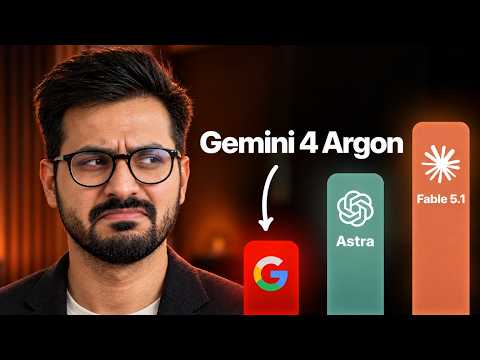
Before diving into the demos, I wanted to see how the model's benchmark scores translate to actual coding. The numbers look promising, but as I ran through the tests, it became clear that real-world performance doesn't always match the hype. Some tasks that seemed straightforward on paper threw up unexpected problems.
Goldberg Simulation and 3D Chess
The first demo was a Goldberg simulation. The model produced a working simulation, but I noticed a few rough edges in the physics. Next, I tried a 3D chess game. Here the results were mixed—the basic board and pieces rendered, but the move logic had issues, and the cost was higher than I expected for a 3D task.
Tower Defence and High Reasoning Rubik's Cube
The tower defence game test followed a similar pattern: the core mechanics were there, but the enemy pathfinding wasn't quite right. I then switched to the high reasoning setting for a Rubik's cube simulator challenge. The high reasoning mode produced a more detailed attempt, but the cube still didn't rotate correctly in all cases. Comparing the default and high reasoning results showed that the extra compute didn't always fix the underlying issues.
Landing Page Design
The landing page design challenge was a different story. The model generated a clean, responsive layout quickly and at a lower cost than the 3D demos. This was the most polished result of the session, highlighting that Gemini 4 Argon is currently stronger with web-based tasks than with complex 3D simulations.
Where the 3D Demos Fall Short
Across the 3D simulations, common problems included inaccurate physics, incomplete game logic, and visual glitches. The model seemed to understand the high-level structure but struggled with the precise implementation details that make these demos feel polished. The website design, by contrast, required less granular spatial reasoning and came out much better.
Final Verdict
Gemini 4 Argon shows promise, especially for web development tasks, but it's not yet a go-to for complex 3D coding. The high reasoning setting can help in some cases, but it's not a magic fix. If you're working on landing pages or similar projects, it's worth trying. For game simulations, you may want to keep an alternative model handy. I'd love to hear which coding model you'd choose—share your experience in the comments.
Tools used in this video
- Gemini 4 Argon
- Kilo Code
- Dokkio
Questions
- What is Google's Gemini 4 Argon?
- Gemini 4 Argon is a multimodal AI model from Google DeepMind with a 1 million token context window. It accepts text, files, audio, images, and video as input, but outputs text only.
- How does Gemini 4 Argon perform on coding tasks?
- In my tests, it handled a landing page design well but struggled with 3D simulations like a Goldberg machine, chess, tower defence, and a Rubik's cube. The high reasoning setting changed results but didn't always resolve the issues.
- What is the difference between default and high reasoning settings?
- The high reasoning setting uses more compute to attempt deeper problem-solving. In the Rubik's cube test, it produced a more detailed output, but the cube rotations were still not fully correct.
- Is Gemini 4 Argon available in Kilo Code?
- Yes, Gemini 4 Argon is available inside Kilo Code. I used it for all the demos in this video, and you can try it there yourself.
Topics
Chapters
- 00:00 Gemini 4 Argon: first impressions
- 00:21 Pricing and Kilo Code availability
- 00:40 Initial coding impressions
- 01:02 Dokkio Ad Placement
- 01:53 Benchmarks vs. real-world performance
- 02:33 Goldberg simulation test
- 03:11 3D chess: results, issues, and cost
- 03:34 Tower defense game test
- 04:08 High reasoning: Rubik’s cube challenge
- 05:18 Comparing the Rubik’s cube results
- 06:10 Landing page design challenge
- 07:13 Landing page results and cost
- 07:33 Where the 3D demos fall short
- 08:16 Final verdict and model comparisons
- 08:52 Try it and share your thoughts
Video description and links
This article was written from the video's description with the help of AI. Watch the video for the full walkthrough.